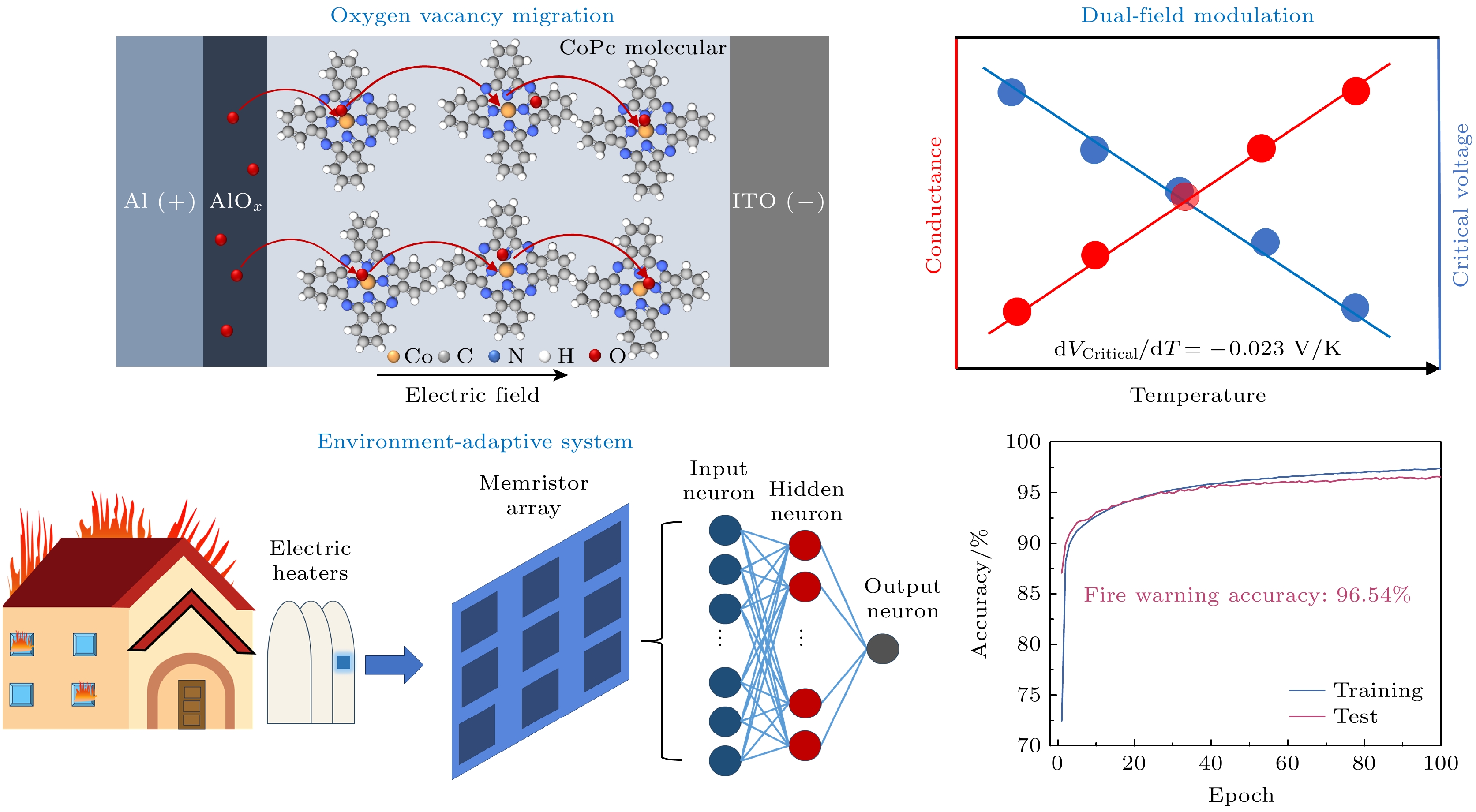
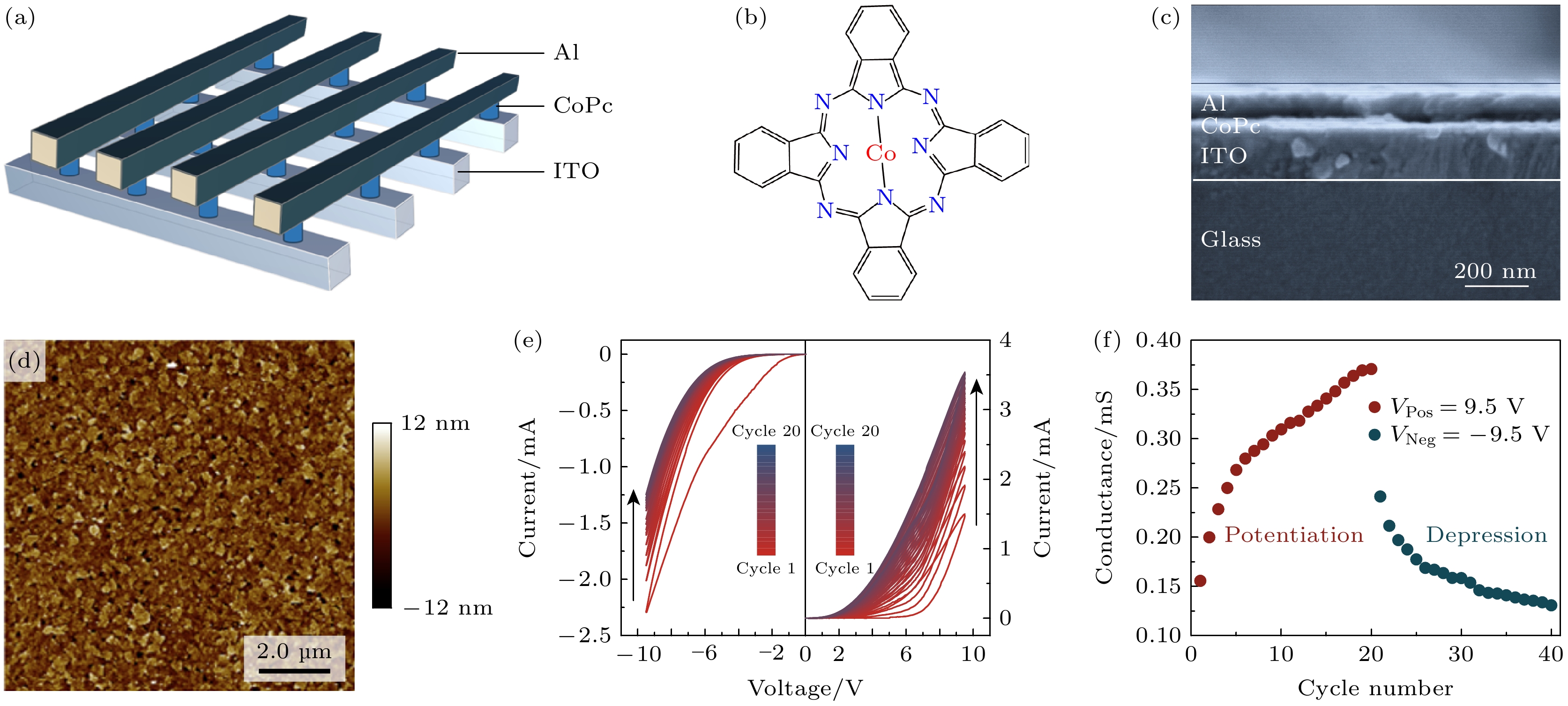
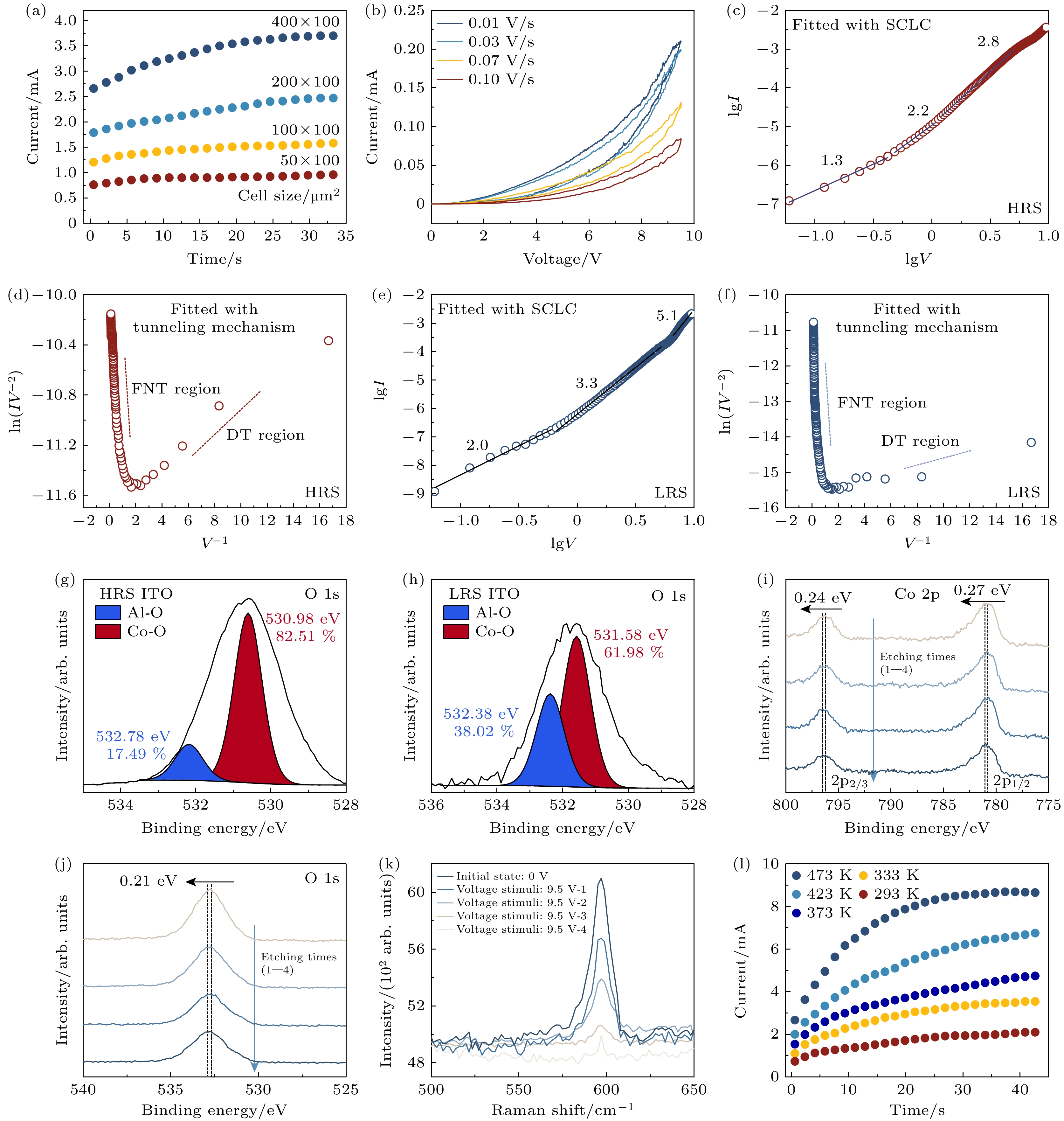
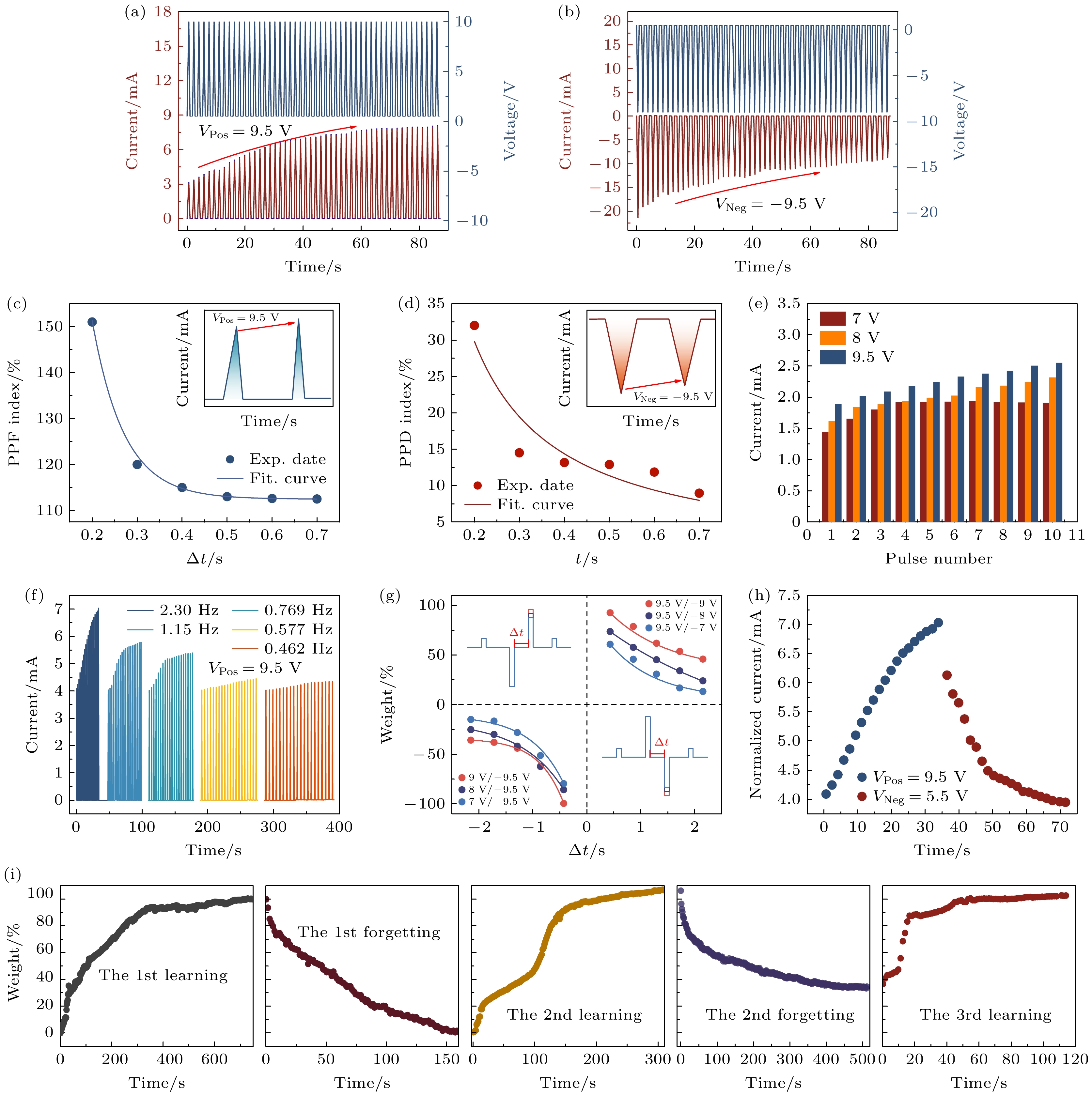
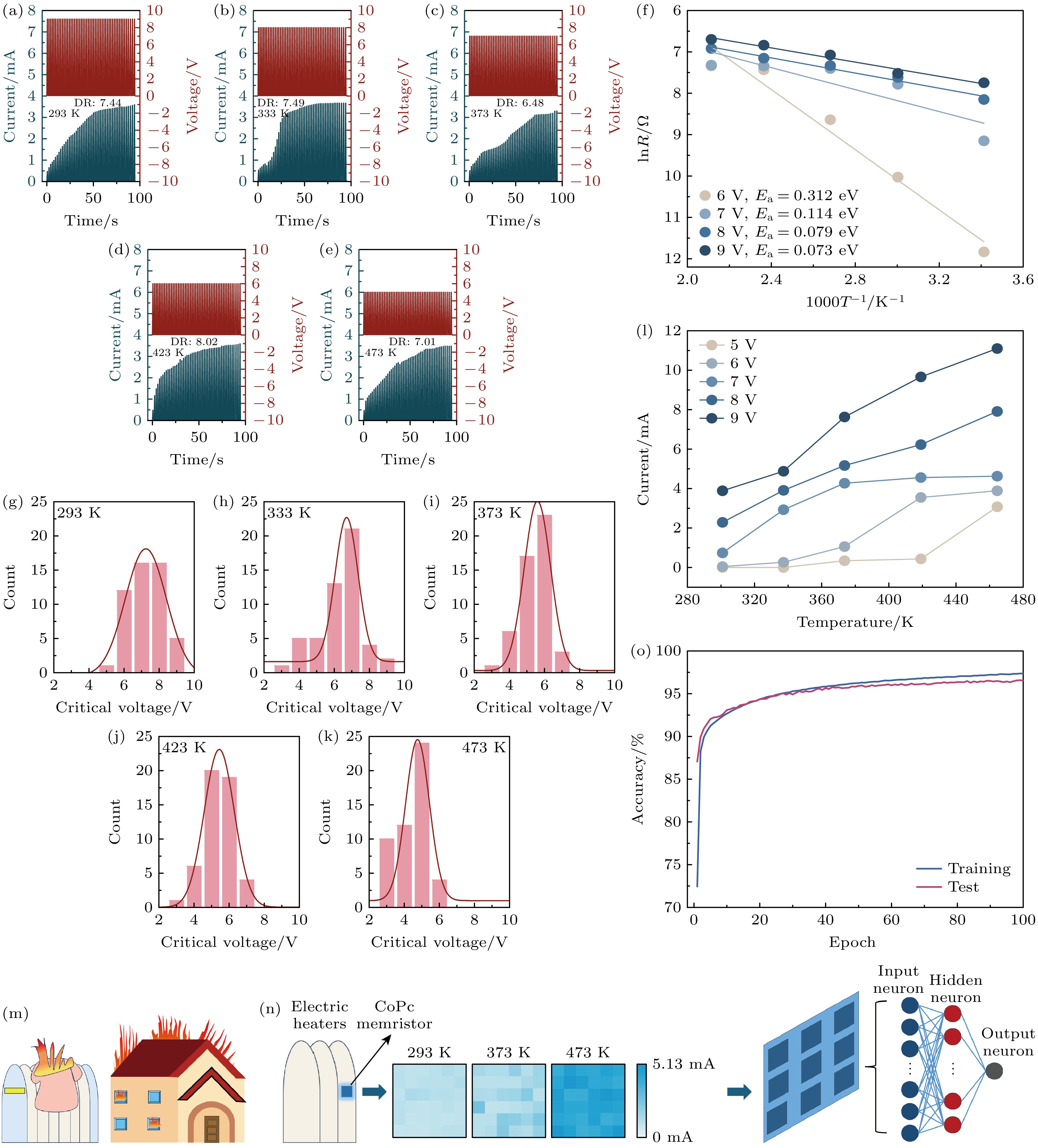
Memristor-driven neuromorphic computing offers a promising path for brain-inspired intelligence by emulating the multidimensional plasticity of biological synapses, thereby achieving energy-efficient parallel computation. However, in the context of dynamically modulating synaptic plasticity, achieving strong environmental adaptability, especially in response to temperature fluctuation, remains a major challenge for organic memristors. In order to solve this problem, a bio-inspired cobalt phthalocyanine (CoPc)-based memristor is developed specifically for synergistic electric-thermal field modulation. The device utilizes the stable planar π-conjugated system of CoPc molecules and leverages dynamic oxygen vacancy (OV) migration at the CoPc/AlOx interface. A comprehensive electrical characterisation is conducted, incorporating X-ray photoelectron spectroscopy (XPS), in-situ Raman spectroscopy, and temperature-dependent electrical measurements across a wide range (293–473 K). This is supported by physical modelling (SCLC, FNT, Arrhenius) to elucidate the underlying mechanisms. Evidence indicates that the device can effectively replicate key aspects of synaptic plasiticy, including short-term potentiation/depression (STP/STD), and pairedpulse facilitation/depression (PPF/PPD), through the regulation of an electric field. The index increases to 151%, indicating a significant increase. Spike-amplitude-dependent plasticity (SADP, 45% weight increase), spike-timing-dependent plasticity (STDP, ΔW = ±90%), and learning-forgetting-relearning dynamics are revealed, unveiling cumulative memory effects linked to OV transport. The device exhibits excellent temperature resilience over the range of 293–473 K, characterised by a linear adaptive shift in its critical voltage (VCritical) from 8.7 V at 293 K to 4.5 V, with dVCritical/dT = 0.023 V/K. Physical analysis attributes this adaptive threshold and stable operation to a dual-field synergistic mechanism based on trap-assisted carrier transport. Elevated temperature thermally activates carriers, reducing the effective barrier for trap escape and OV migration activation energy (Ea = 0.073–0.312 eV), which facilitates conduction through Fowler-Nordheim tunneling (FNT) at lower electric fields. Conversely, lower temperatures require higher electric fields to enhance trap ionization efficiency through the Poole-Frenkel effect, compensating for reduced thermal energy. The validation of the linear VCritical-T relationship as a sensitive temperature transduction mechanism is achieved by developing an intelligent fire warning system. This study involves a 6 × 6 CoPc memristor array integrated into household heaters, combined with a deep learning model consisting of a fully connected network with 20 × 16 + 16 × 8 + 8 × 1 neurons. The resulting model achieves an accuracy of 96.54% in identifying high abnormal temperature. This work establishes a novel paradigm for environmentally adaptive neuromorphic devices through molecular/ interface design and synergistic multi-field modulation, providing a physical realization of temperature-elastic synaptic operation and demonstrating its practical feasibility for powerful next-generation brain-inspired computing platforms.





 DownLoad: CSV

 DownLoad:
